Red Bull's Co-Founder Handed His Empire to Family—One Grandson Nearly Burned It Down
Here's a fact that surprises most people: Red Bull isn't really an Austrian company. It's a Thai one that Austria happened to bottle better. The drink that fuels Formula 1 teams and gives 8.7 billion cans a year to people who need to pull an all-nighter was invented by a Bangkok pharmaceutical salesman, and to this day his family owns more of the company than the guy whose name is on every marketing deck.
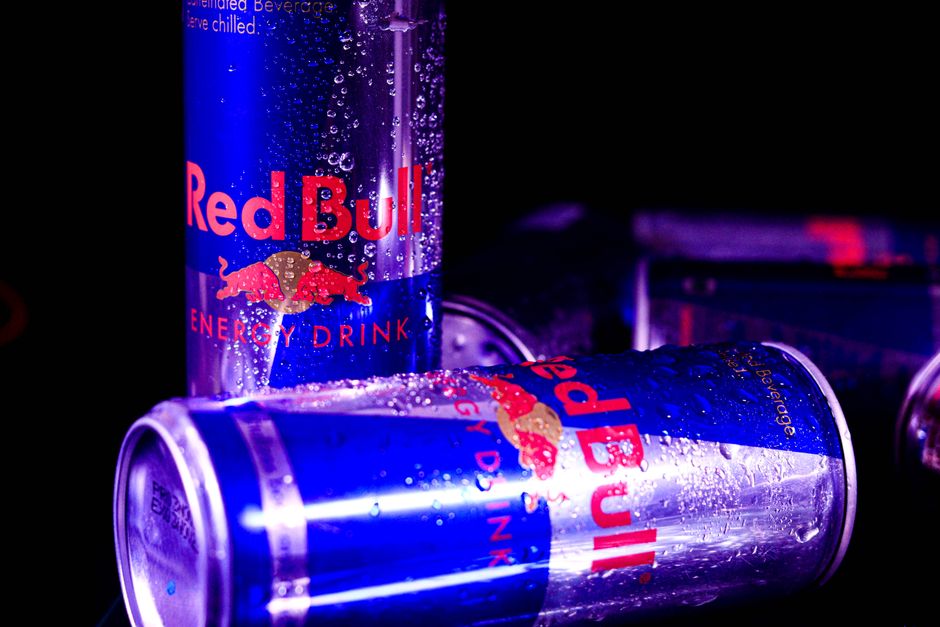
Photo by Sanket Sawale on Pexels
That family has also spent the last decade at the center of one of Thailand's ugliest justice-system scandals, after a grandson allegedly killed a police officer with a Ferrari and simply never came home to face it.
A Thai Truck Driver's Son Beats a Multinational to the Punch
Chaleo Yoovidhya grew up poor, the son of Chinese immigrants in Thailand, and built a pharmaceutical company before inventing a syrupy energy tonic called Krating Daeng (literally "red gaur," the wild ox on the can) in 1976. It was cheap, sweet, and sold to truck drivers and manual laborers who needed to stay awake on long shifts — nothing like the premium lifestyle brand it would become.
In 1982, an Austrian toothpaste-and-detergent salesman named Dietrich Mateschitz was in Bangkok on business, jet-lagged, and someone handed him a can of Krating Daeng. He said it cured his jet lag on the spot. Instead of just becoming a customer, he tracked down Chaleo and pitched a partnership: reformulate it, carbonate it, sell it to Europeans as a premium lifestyle product instead of a factory-floor pick-me-up.
- Mateschitz and Chaleo each put in $500,000 and each took a 49% stake in the new company, Red Bull GmbH
- The remaining 2% went to Chaleo's son, Chalerm — a tiebreaker stake that effectively gave the Thai side control
- Mateschitz ran operations out of Austria; Chaleo largely stayed hands-off and collected dividends from Thailand
- The product launched in Austria in 1987 after a multi-year reformulation, and didn't reach the U.S. until 2001
That 2% tiebreaker matters more than it looks. It meant that even at the company's founding, the Thai family — not the Austrian marketing genius — technically held the deciding vote.
Why the "Austrian" Brand Is Majority Thai-Owned
When Chaleo died in 2012 at age 88, his stake passed to his family, and their combined holding worked out to 51% of Red Bull GmbH — meaning Thailand's Yoovidhya family, not Austria, has held the controlling stake in one of the world's most recognizable beverage brands. Mateschitz built the global marketing machine — Formula 1 teams, cliff diving, the Red Bull Stratos space jump — but he was never the majority owner of the thing he made famous.
This is the same dynamic I've touched on with other founding splits — one partner supplies the product and the name recognition, another quietly holds the numbers. It's the flip side of what I wrote about in The Secret 23% Stake LVMH Built in Hermès—Then Lost Anyway: sometimes the quiet minority stake is actually the majority in disguise.

Photo by Kaan ALTUN on Pexels
The Ferrari, the Motorcycle Cop, and the Nine-Year Disappearing Act
This is where the story turns dark. In the early hours of September 3, 2012, Chaleo's grandson Vorayuth "Boss" Yoovidhya was driving his black Ferrari through Bangkok when he struck a police officer, Sgt. Maj. Wichean Glanprasert, who was riding his motorcycle. The officer's body was dragged more than 300 feet before Vorayuth reportedly fled the scene.
Vorayuth faced charges of speeding, reckless driving, and hit-and-run causing death. Then, for years, almost nothing happened:
- He repeatedly failed to show up to meet police, with lawyers citing work trips and illness
- Thai authorities didn't issue an arrest warrant until 2017 — five years later, after he'd missed eight legal summonses
- By then he had already left Thailand and never returned
Then, in July 2020, Thai prosecutors announced that all charges against Vorayuth had been dropped. The stated reason floored a lot of people: his family had paid roughly 3 million baht (about $94,400) to the brother of the dead officer in exchange for a pledge not to press charges. Interpol issued a red notice for him that October, but Vorayuth has never faced trial — he reportedly lives abroad, out of Thailand's reach.
The Cover-Up Story Nobody Saw Coming
The case looked buried until 2025, when it resurfaced in an entirely different form. In April 2025, a Thai court convicted two former officials — ex-Deputy Attorney General Nate Naksuk and a former prosecutor, Chainarong Sangthongaram — for abuse of power tied to allegedly altering the Ferrari's recorded speed to help Vorayuth dodge the speeding charge. They were sentenced to three and two years respectively. Six other defendants, including a former national police chief, were acquitted for lack of evidence.
In other words: it wasn't just that a rich man's family paid its way out of a killing. Officials inside the Thai justice system were separately convicted of doctoring evidence to help him do it. The case had become such a national embarrassment that Thailand's own prime minister publicly vowed "justice" after the 2020 charges were dropped — and it still took five more years to convict anyone at all.
None of this touched the family's actual ownership of Red Bull. The company's global business — now generating tens of billions in annual revenue — has continued running largely untouched by the scandal, a split that's fairly common with founding families: the corporate entity insulates itself from the personal conduct of individual heirs, however damaging.
What This Says About Founder Legacies
Chaleo built something that outlived him by a wide margin, and structured the ownership so his family, not his foreign partner, would keep control. That's the triumphant version of the story. The Vorayuth case is the reminder that inherited control doesn't come with inherited character — and that in some countries, enough money can make even a fatal hit-and-run functionally disappear.
If you take one thing from this: next time you crack open a Red Bull, remember the can is Thai before it's Austrian — and that the same family fortune behind it has been tangled in one of Southeast Asia's most notorious unresolved justice cases for over a decade.
댓글
댓글 쓰기